

Alcohol · For family and friendsOther topics
Alcohol addiction in the family: help for family and friends
When someone you love drinks too much, it weighs on you too. Here you'll find out what help is available and how you can support them without losing yourself.
The information on this page refers to Germany.
A first check
How can I tell that someone needs help?
There are signs that family members often notice:
Drinking
- Does the person drink secretly or hide alcohol?
- Do they find it hard to cut down, even when they try?
Mood
- Are they irritable, restless or low without alcohol?
- Do they get defensive when you bring up their drinking?
Daily life and family
- Are work, family or friendships suffering because of the drinking?
- Are you taking on more and more tasks or making excuses for them?
These questions are not a diagnosis. Important: you are not to blame for someone else's addiction, and you don't have to solve it alone.
In three steps
The way out of alcohol addiction
Step 1: Find addiction counselling or a clinic
The person affected has to take the first step themselves. But you can show them that help exists and get support for yourself right now.
- Where to turn
- You can go to a GP or an addiction counselling centre near you (opens in a new tab). Counselling centres are there for family members too, confidential and usually free.
- The first appointment
- In the first conversation you can talk calmly about what's on your mind. Together you get a better understanding of the situation and find a next step, without pressure.
For family and friends
What you can do
Talk at a calm moment
Choose a time when the person is sober. “I” statements (“I'm worried because …”) usually land better than accusations.
Show ways to get help
Offer to look for a counselling centre together or to come along to the first appointment. The decision stays with them.
Help for you
Your own counselling
You can get counselling on your own, without the person affected being there, locally or online with DigiSucht (opens in a new tab) (in German).
Set boundaries
Think about what you are willing to carry and what not, and say it clearly. That protects you and your relationship.
Step 2: Alcohol detox and rehab
Not everyone needs detox: without physical dependence, outpatient counselling or therapy (opens in a new tab) is often enough. If detox is needed, treatment usually has two parts: medically supervised detox and rehab. For family members this is often a time between hope and worry.
- Detox with medical support
- Alcohol withdrawal can be dangerous if someone has been drinking a lot for a long time. It belongs under medical supervision, as an outpatient or in a clinic.
- Rehab and costs
- Detox can be followed by rehab, as an outpatient, day-patient or inpatient, often directly afterwards. It is usually paid for by the German Pension Insurance or health insurance.
Support during treatmentcoobi care supports people from detox onwards, during treatment and after, with smartwatch data on sleep, stress and activity, daily check-ins and exercises for difficult moments.Learn more ↓For family and friends
What you can do
Interest instead of control
Ask how the person is doing instead of monitoring them. Responsibility for the treatment lies with them.
Use what the clinic offers
Many clinics offer family sessions or seminars. Ask about them.
Help for you
Take a breather
The treatment period can also be a breather for you. Look after your sleep, exercise and the people who are good for you.
Self-help for family members
In groups for family members you meet people who understand how you feel.
Step 3: Aftercare following addiction treatment
After treatment, daily life without alcohol begins, for the person affected and for you. This time is crucial, and often shaped by fear of relapse.
- Aftercare and self-help
- Outpatient aftercare and self-help groups give stability in the first months.
- Structure in daily life
- A reliable routine, time together and people who are good for you give stability, to you as well.
- If there is a relapse
- A relapse is not a failure. Keep talking, without blame, and encourage them to get support quickly.
- Digital services
- Some clinics use apps such as coobi care from detox onwards and continue them in aftercare.
For family and friends
What you can do
Plan together
Think together about what helps in difficult moments, such as celebrations or stress.
Let trust grow
Trust takes time. Show interest without controlling.
Help for you
Keep your own boundaries
Even after treatment you can say what you need and what you will no longer go along with.
Groups for family members
Many family members find long-term support in a group for family members.
Support from detox onwards
coobi care: support during and after treatment
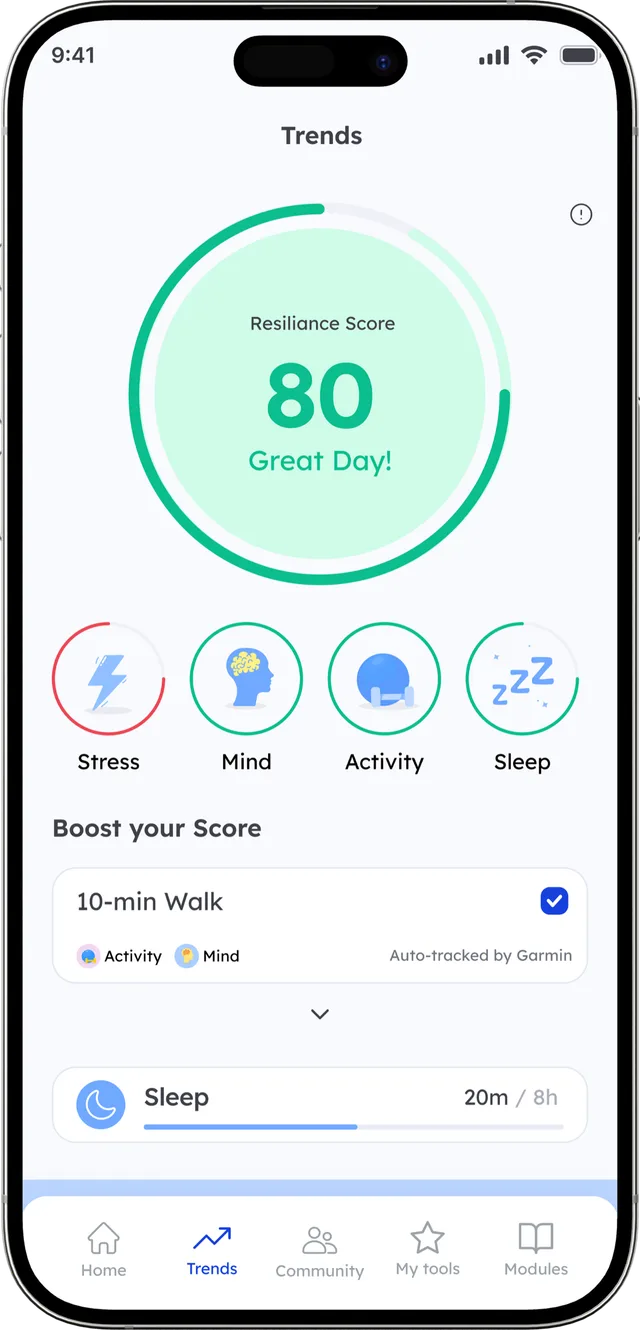
coobi care supports people from detox onwards: during treatment and in the time after. Clinics use the app alongside regular appointments, in treatment and in aftercare.
- SmartwatchThe smartwatch measures sleep, stress and activity.
- Check-ins and exercisesShort daily check-ins and exercises in the app.
- Progress and daily toolsShows progress and the tools for the day.

Questions and answers
Frequently asked questions from family and friends
My partner drinks too much. What can I do?
Raise your concern at a calm moment when you are both sober, using “I” statements instead of accusations. The decision to change lies with them. An addiction counselling centre will also advise you if your partner is not yet looking for help.
Where can I get help as a family member?
Addiction counselling centres also advise family members, confidentially and usually free of charge. There are also self-help groups for family members, where you meet people going through something similar.
Can I force someone into treatment?
Usually not; the decision lies with the person affected. But you can say clearly what you would like and show ways to get help. In an acute emergency, call 112.
What is codependency?
This term often describes family members who increasingly organise their lives around someone else's addiction, for example by excusing the drinking, controlling it or pouring alcohol away. That's understandable, but it rarely helps and takes a lot of strength. An addiction counselling centre can help you recognise such patterns.
How can I support someone after detox or rehab?
Show interest without controlling, and think together about what helps in difficult moments. Aftercare and self-help offer additional support. Look after yourself, too.
I can't take it anymore. What can help me?
It's understandable if the situation exhausts you. It's okay to think of yourself, set boundaries and get relief, for example at an addiction counselling centre, in a group for family members or in your own psychotherapy. If there is violence, your safety comes first.
What our users say
“My favourite feature of the app is the evening check-in. It makes me re-evaluate my day, which helps me understand the state I am in.”
“For me, all the strategies for dealing with cravings are really valuable.”
“The product is easy to use and the design is clean. The trends on the home screen help me understand my behaviour patterns.”



Notes
The information on this page is meant to give you orientation. It does not replace a personal conversation with a doctor or therapist and is not intended for self-diagnosis or self-treatment. The same applies to the coobi care app: it does not replace treatment or advice. Processes, costs and services refer to Germany and may differ in Austria and Switzerland.