

Cannabis · For family and friendsOther topics
Cannabis addiction: help for family and friends
When your child, your partner or someone else you love smokes too much weed, it weighs on you too. Here you'll find out what help is available and how you can support them.
The information on this page refers to Germany.
A first check
How can I tell that someone needs help?
Not every use is a problem straight away, and with teenagers some of it is part of growing up. But there are signs worth taking a closer look at:
Use
- Does the person smoke regularly, even alone or during the day?
- Are there repeated arguments about money, or secrecy?
Mood
- Do they seem unmotivated, irritable or very withdrawn?
- Do they get very defensive when you bring up smoking?
School, work, friends
- Are their results at school, in training or at work clearly dropping?
- Are they losing interest in friends and hobbies that used to matter to them?
These questions are not a diagnosis. An open conversation usually helps more than control. And: you are not to blame if someone close to you smokes weed.
In three steps
The way out of cannabis addiction
Step 1: Find addiction counselling
Often the first step is an open conversation. Counselling centres can help you with this, even if the person doesn't want to come along yet.
- Where to turn
- You can go to an addiction counselling centre near you (opens in a new tab); many also have services for young people. Your GP, or for children the paediatrician, is there for you as well.
- Counselling for you
- Many counselling centres also see family members on their own, confidentially and usually free of charge. You don't have to stay alone with your worries. Information, including for parents, is available at cannabispraevention.de (opens in a new tab) (in German).
For family and friends
What you can do
Keep talking
Ask instead of judging: what do they get out of smoking? Interest opens more doors than bans or control.
Clear rules, with reasons
You can set out the rules in your home. Explain your reasons and stick to them.
Help for you
Your own counselling
An addiction counselling centre can help you work out how to reach the person, locally or online with DigiSucht (opens in a new tab) (in German).
Other family members
In groups for family members and parents' groups you meet people going through something similar.
Step 2: Cannabis withdrawal and therapy
With cannabis, outpatient counselling or therapy is usually the focus; inpatient detox is rarely needed.
- What happens when quitting
- Sleep problems, irritability and restlessness are common in the first weeks. This is often part of the process and usually passes.
- Outpatient programmes
- Counselling centres offer programmes especially for cannabis problems, also for teenagers and young adults.
- If more is needed
- With heavy use or mental health problems, treatment in a clinic can make sense, for young people also in a child and adolescent psychiatry service. The counselling centre or your GP or paediatrician (opens in a new tab) can help you find one.
Support during treatmentcoobi care supports people from detox onwards, during treatment and after, with smartwatch data on sleep, stress and activity, daily check-ins and exercises for difficult moments.Learn more ↓For family and friends
What you can do
Patience in difficult weeks
Irritability when quitting is often part of withdrawal. Talk about it without taking it personally.
Act on signs of psychosis
If the person seems confused, very suspicious or perceives things others don't, get medical help; in an emergency call 112.
Help for you
Look after yourself
Worrying about someone you love takes strength. Get relief through counselling, friends or other family members.
Step 3: Aftercare following addiction treatment
After quitting, friends, parties and stress come back. This time is crucial, for the person and for you.
- Aftercare and self-help
- Aftercare appointments and self-help give stability in the first months, in person or online.
- If there is a relapse
- A relapse is not a failure. Keep talking and encourage them to get support quickly.
- Digital services
- Some clinics use apps such as coobi care from detox onwards and continue them in aftercare.
For family and friends
What you can do
Support new routines
Sport, hobbies, a regular daily routine: support whatever does the person good without cannabis.
Let trust grow
Show interest without controlling. Trust takes time.
Help for you
Sharing with others
Many family members find lasting support in a group; for parents, this might be a parents' group.
Support from detox onwards
coobi care: support during and after treatment
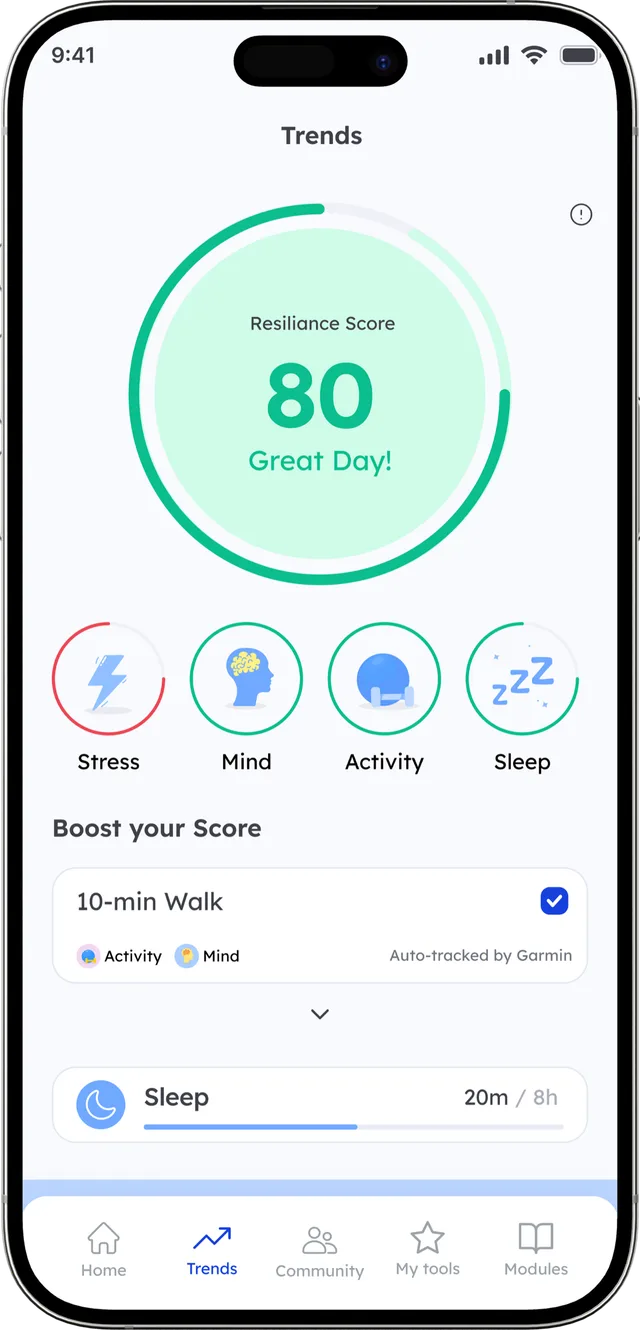
coobi care supports people from detox onwards: during treatment and in the time after. Clinics use the app alongside regular appointments, in treatment and in aftercare.
- SmartwatchThe smartwatch measures sleep, stress and activity.
- Check-ins and exercisesShort daily check-ins and exercises in the app.
- Progress and daily toolsShows progress and the tools for the day.

Questions and answers
Frequently asked questions from family and friends
My child smokes weed. What can I do?
Keep talking, even when it's hard. Interest and clear rules usually help more than control or punishment. An addiction counselling centre will also advise you on your own, and you can offer to go together.
How can I tell if someone is smoking weed?
Possible signs are red eyes, increased appetite, tiredness, withdrawal, a new circle of friends or slipping performance at school or work. With teenagers, though, many of these changes can also be part of puberty. An open conversation usually helps more than control.
Does cannabis harm the teenage brain?
The brain keeps developing into young adulthood. Experts believe that regular use during this time can impair concentration, memory and motivation and increase the risk of mental illness. Partial legalisation for adults doesn't change that.
Can I force someone into counselling?
Counselling usually can't be forced, and pressure often leads to resistance. But you can say clearly that you are worried and offer to go together. Many counselling centres will also advise you on your own.
My partner smokes weed. What can I do?
Raise your concern at a calm moment, without blame, and say what the use does to you and your relationship. Only your partner can make that change. Look after your own boundaries and get support.
Where can I get help as a family member?
Addiction counselling centres also advise family members, confidentially and usually free of charge. In groups for family members, or parents' groups for parents, you can share with people going through something similar, in person or online.
What our users say
“My favourite feature of the app is the evening check-in. It makes me re-evaluate my day, which helps me understand the state I am in.”
“For me, all the strategies for dealing with cravings are really valuable.”
“The product is easy to use and the design is clean. The trends on the home screen help me understand my behaviour patterns.”



Notes
The information on this page is meant to give you orientation. It does not replace a personal conversation with a doctor or therapist and is not intended for self-diagnosis or self-treatment. The same applies to the coobi care app: it does not replace treatment or advice. Processes, costs and services refer to Germany and may differ in Austria and Switzerland.